It has been almost a month since I moved from using the Mac as my daily driver back to Linux. This led me to swap distros and desktop environments, trying to find where I would land. There’s a lot to cover, and with my goal of one blog post a month, this felt like the perfect time to write something here.
My Mobile Experience
So, back to Android with the Google Pixel 9a has been actually really awesome. This phone does everything I need, and I don’t really game at all, really, on my phone, except maybe a handful of puzzle games. That said, it has been snappy, doesn’t feel sluggish at all, and I don’t think I ever really needed something more powerful. I did try a Samsung Galaxy A25, and well, I’d say it was a bit too slow for my needs and chugged on basic tasks.
I will say, going from either the Apple or Samsung ecosystem straight into the official Google experience has been kinda nice. It doesn’t feel like Google forcing its services down my throat, since I was able to replace almost every core app with open-source alternatives that don’t require me to back up my data to the Google Cloud. So, on this experience, I would say I was pretty successful.
Watch Experience
I was surprised by how well this AmazFit Watch works. I was skeptical, but on Android, it sends all my notifications and is easy to customize with its app. The only annoyance is prompts for “extra tracking metrics” when you click certain health metrics, but you still get sleep tracking, standing metrics, step tracking, and more without buying. For less than 100 USD, I am amazed!
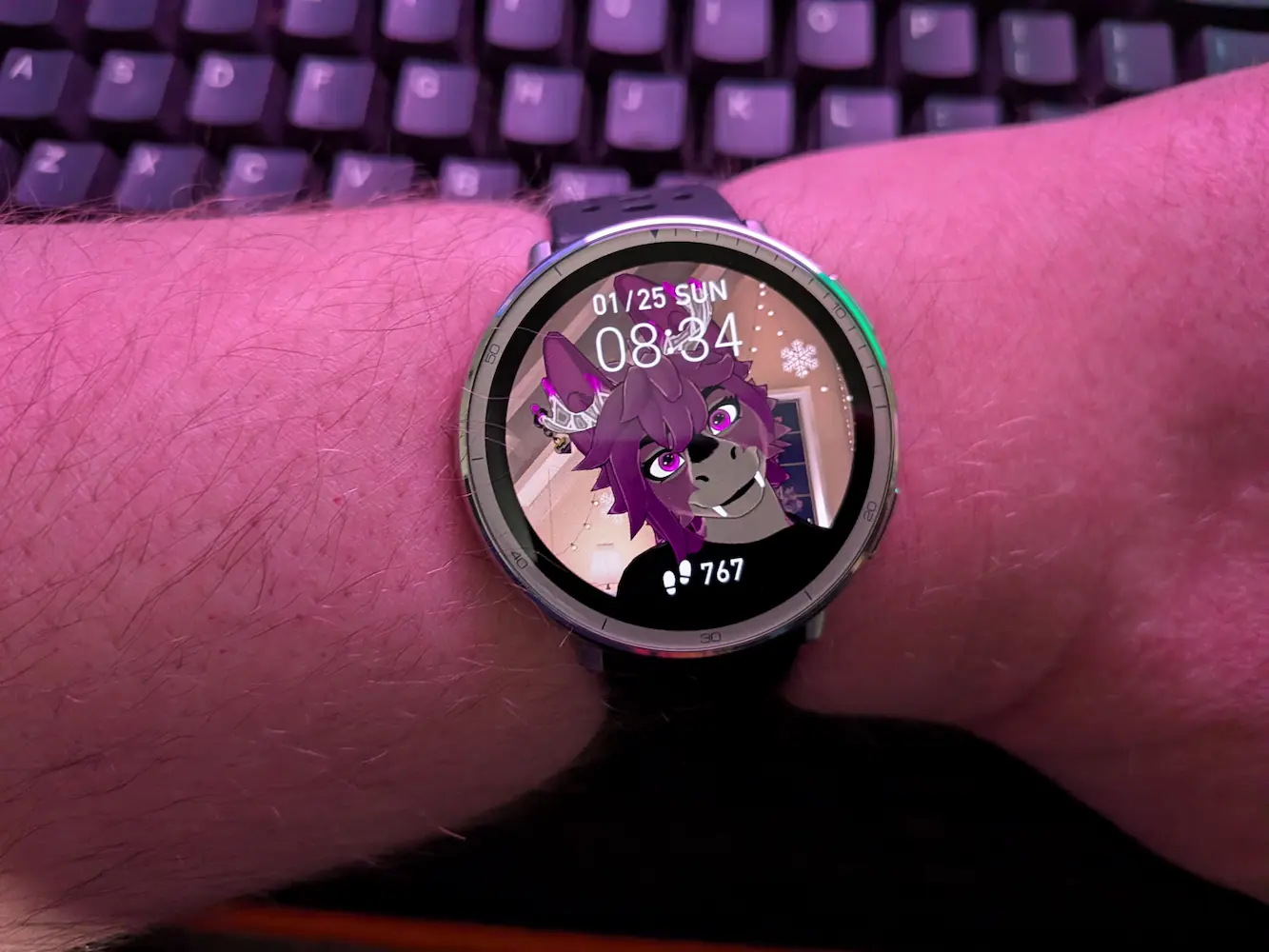
The biggest thing I use my watch for is timers when I am cooking, and its built-in voice assistant works great. It may not be instant, but it just takes 2 seconds to hear my request and then start the timer. I also don’t have to charge this thing but once a week! A color display, wake detection, all this tracking data, and it’s still less than 100 bucks! I have to say, while it isn’t as customized or snappy as Apple or Android Watch OS… It still is an amazing value.
Back on Linux Journey
As I mentioned previously, I have returned home to my Linux desktop as my daily driver. I will say this has been refreshing, but the jump from distro to distro, now even desktop environment to desktop environment, has been biting me again. I think I’m starting to land on vanilla Arch Linux. I had been sticking with KDE for most of my Distro-hopping between Fedora, Ubuntu, and KDE Neon. That said, I am now on Arch and have decided to go with COSMIC.
So I have to call out Egee for pointing out the same feeling Ihave had: there’s been a decrease in people creating tons of “slop-ware” and just not maintaining the software they put out. I think some of this could be from AI helping lower code costs, but as a few videos I have seen point out, the cost of Software has not changed… To learn more, go check out this video on the topic. But the TL;DR version is, AI makes it super easy to output code… However, software still has the issues pointed out by Egee of testing and QA, which just isn’t happening anymore.
I am not saying that I had tons of issues on KDE—quite the opposite. It was a great experience. However, I want to be on something different, something that feels fresh and offers its own experience. In that regard, the new system has been very stable so far; though, since it is the first version, I have had to work out a few kinks. For example, it doesn’t ship with secrets or keyring support out of the box, so I had to shoehorn in gnome-keyring and a few other apps that aren’t part of its core stack.
Conclusion
Well, so far, I am really happy to be back on Linux; it is giving me a sense of appreciation for not needing the best and greatest hardware. I also enjoy how easy it is to experiment without feeling like I am missing out on the latest tech with my little Framework Laptop. It is still kicking and handling everything like a champ. I do wanna try out the new Intel Core Ultra chips whenever the next refresh happens, because I think they could be a good upgrade from my Ryzen 5 7640U. But I am going to hold out for the new Panther Lake, which I hope eventually makes its way to Framework devices.


